 English
 Chinese (Simplified)
 Khmer
Khmer Lao
Lao Thai
Thai Vietnamese

What is the difference between white gold vs yellow gold vs rose gold? Today, we’re going to be looking into an important choice when it comes to selecting a jewellery item: the different colours of gold available.
In this article, we’ll cover the features of each gold colour. We’ll also explain the advantages they offer when formed into jewellery.
Mục lục
Why do we have 3 different gold colours?
Since early history, gold has inspired craftsmen from different cultures to make stunning ornaments and pieces of jewellery. However, the softness of gold has always presented jewellers with hurdles. This is because gold is a very malleable metal; it can easily be bent or dented. Therefore, pure gold on its own cannot be used to make objects like jewellery. Because as you can appreciate, no one wants a ring or earrings that lose their shape!
Over time, this has led to artisans developing gold alloys. An alloy is a mix of two or more metals. Gradually, through experimentation, by blending harder metals like copper and platinum with gold, craftsmen have created gold alloys that ensure durability and robustness in jewellery. From these experiments, three fundamental colours of gold have come into being: yellow gold, white gold and rose gold.
1. Yellow gold: timeless splendour
When we think of gold, our minds immediately turn to the glowing beauty of yellow gold. It’s a metal which encapsulates luxury and royalty, and inspires the senses with its gleaming colour.
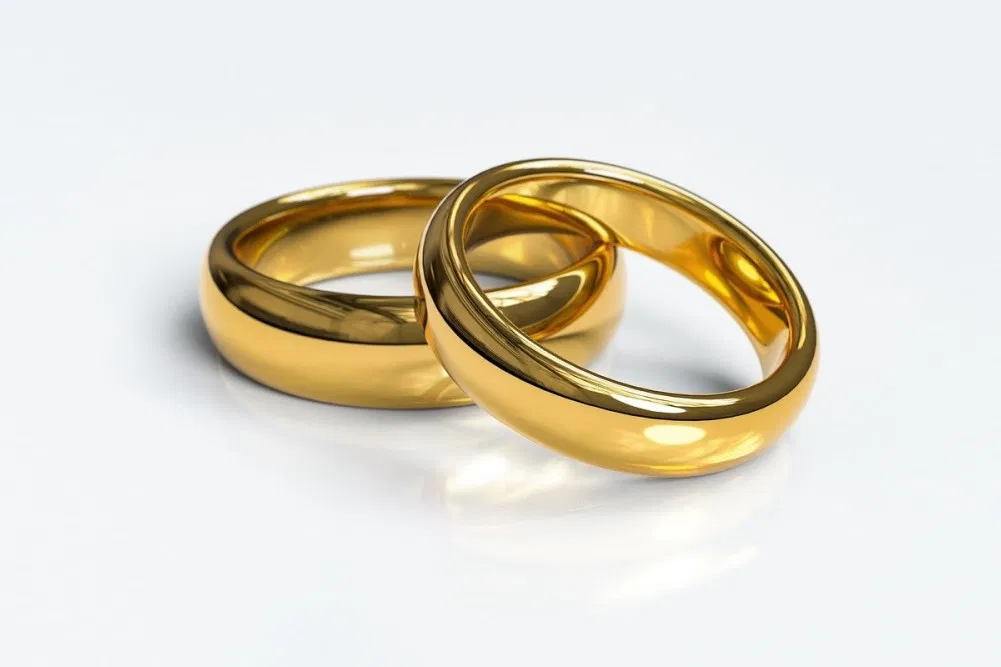
Is yellow gold ‘pure’ gold?
Many people consider yellow gold as being the ‘purest’ type of gold. This is because its colour is most closely related to the gold which is mined from the Earth. However, this assumption of purity in jewellery items would be something of a mistake. Yellow gold jewellery actually contains alloy metals – as we explained in the section above.
Why does yellow gold contain alloys?
To recap what we have already learned above, the yellow gold you see in jewellery is not pure gold, but a gold alloy. This is because pure gold alone is too soft to maintain its shape. Therefore, to be used in jewellery, gold must be blended with other harder metals, such as silver, copper and platinum.
Karats – what are they?
A gold “karat” is a measurement which references the amount of pure gold in an item of jewellery. One karat represents 1/24 of a whole item of gold jewellery. In other words, an item of pure gold, where all 24 parts are just gold, is called 24-karat gold. In turn, an item that contains 18 parts of pure gold and 6 parts of alloy metals is called 18-karat gold. Karats are abbreviated to ‘K’. For example, to represent 18-karat gold we simply write ’18K gold’.
Is 9K or 18K gold better?
While high karat content like 18K can sound like a positive factor when buying gold jewellery, you should know that it will also raise your item’s price. In other words, 9K gold is always more affordable than 18K gold because it contains less gold (an expensive metal) and more alloy metals (usually more affordable).
It’s also important to bear in mind that a higher karat amount like 18K represents a slightly softer item of gold than a lower karat amount like 9K. This means that 18K gold items can bend or dent more easily than 9K gold items. Therefore, they require more care.
However, a lower karat value like 9K gold usually means that your jewellery item can feel a little lighter or less robust than an 18K gold item. When it comes to colour, the yellow colour of 18K gold can be a little more intense than that of 9K gold, when compared side by side.


 hieuleba
 09.1234.1244
 0912341244